


Floor leveling is important to protect your investment and keep your family safe. The longevity of your property is vastly improved by using screw jacks for houses for foundation support, but there are a few common mistakes to avoid.
At Ellis Manufacturing, we’ve seen firsthand how improper techniques and overlooked details can escalate minor problems into significant structural issues. Troy Frost, Vice President of Sales, notes, "People often want to do things inexpensively, but inadequate solutions usually fail, causing frustration and additional costs."
In this guide, we'll highlight common floor leveling mistakes and offer expert advice on avoiding them, ensuring your project is safe, effective, and durable.
Mistakes During Diagnosis
Learning how to level a house begins with accurately diagnosing the problem.
"Often, improper support beams, moisture damage, or overloaded joists are at the core," says Brian Park, Director of Sales and Business Development. "Foundation issues can arise from moisture, soil drainage problems, or beams inadequately sized for their load."
Moisture is one of the most common concerns. Being able to get into your crawl space or basement is a great place to start figuring this out. Foundations do naturally settle, but your builder should have taken this into account and tested the soil composition.
| Underlying foundation complications stem from: |
|---|
|
You’ll know you have foundation issues if you see gaps between floorboards, between baseboards and flooring, or around window and door frames. Any cracks, vertical or horizontal, are a clear sign that you need house leveling.
Windows and doors that don’t shut properly anymore, or uneven flooring, are other indicators that you might want to start searching for house jacks for sale. The underlying concerns cannot be ignored, as the foundation will worsen over time.
A visual inspection is a great start. However, inaccurate assessments lead to ineffective solutions and create larger issues. If you are uncertain, we recommend consulting structural engineers; professional guidance typically costs less than $1,000 but saves significantly long-term.
Mistakes During Jack Selection and Installation
Once you’ve diagnosed the problem and identified what beams may be overloaded or where you need floor joist support, it’s time to select house jacks.

Choosing the Wrong Jack
| When selecting a floor jack for house leveling, three factors should be considered: |
|---|
|
Improper Placement
If you are unsure about placement, consult a professional. Improper placement damages joists and causes instability in your home. Identify where the foundation is weak or unstable. You want shore posts spaced evenly (ie, every 5 feet) and directly under the beam. Closer spacing might be needed, especially for heavy loads or soft soil.
Brian advises, "Spacing and placement accuracy ensure stability; incorrect spacing undermines the entire effort."
Incorrect Installation Techniques
A home floor jack must have a proper footing to adequately support your joists. Without one, the jack will sink into the ground, defeating its purpose.
| Here are a few options for creating a stable footing: |
|---|
|
Ensure the steel shores remain vertical to maintain structural integrity. "Attach the jacks securely to the beams; they must be integrated, not merely placed beneath," warns Troy.

Other common installation errors are:
|
Troubleshooting Common Problems
Jack Malfunctions
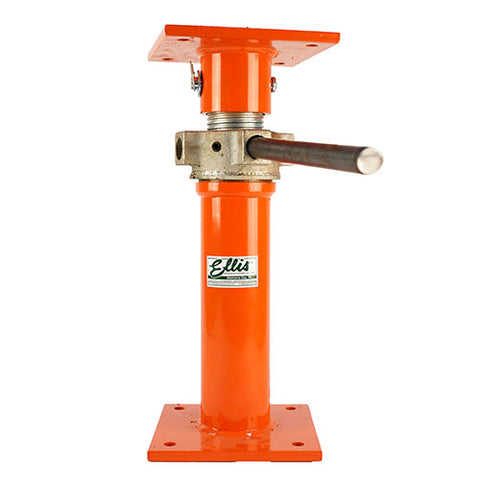
Difficulty turning a jack is a very common problem. Ensure ease of use by buying one that has thrust bearings and can be adjusted using a turning bar instead of just a wrench. Poorly designed foundation jacks result in slipping or backlash. Purchase from a reputable company that uses high-quality materials.
"Our jacks are engineered for ease of adjustment and reliability, eliminating common issues seen with inferior products," explains Brian.

Uneven Leveling
If you’ve found that your property still has uneven leveling after installing house jacks, you’ll want to address it right away. To avoid this, never lift quickly or too much. Small increments and time will show you how much the foundation leveling affects your home.
Structural Issues
During leveling, you may find that there are bigger structural issues. If more cracking or unevenness appears, consult a structural engineer. Sometimes it isn’t immediately clear, but any deeper issues reveal themselves when you start leveling the house.
"Early intervention is always better. Deeper issues become apparent during initial adjustments," advises Troy.
Preventing Future Problems
Make a schedule and put it in your calendar to do regular inspections of your floor leveling. This provides a baseline, and you’ll be able to tell when things shift or change. Identifying problems early lessens long-term damage and costs to your investment.
To maintain the lifespan of your crawl space jack, some maintenance is required. Be sure to consult with the manufacturer, as regular cleaning may be necessary. Specifically for our screw jacks at Ellis, lubrication is typically only needed if you plan to adjust the jack again after it has been in a static position for a period of time.
Floor Leveling Experts
Remember that many mistakes can be avoided when learning how to level a house. Not all house jacks are created equal, and we believe in full transparency and customer support to avoid costly and dangerous consequences.
Since 1951, Ellis Manufacturing has been building, testing, and consulting with DIY homeowners and contractors to ensure the highest-quality product. Our patented thrust bearings make adjustments 10x easier, and our team enjoys consulting with our customers on their leveling projects.
Call us and we’ll troubleshoot together. We look forward to talking with you about your foundation repair project. Let us help ensure your home remains safe and stable for generations to come.
Disclaimer: The information provided in these articles is for general informational purposes only and is not intended as a substitute for professional engineering advice. Every project has unique requirements and complexities. Therefore, it is essential to consult with a qualified professional engineer to guide you through the specific nuances of your individual project and ensure its safety and compliance. These articles do not offer engineering guidance.